
How to Make Scientific Diagrams for Research Papers
Learn how to make scientific diagrams for research papers with a source-grounded workflow for verification, accessibility, and journal-ready export.
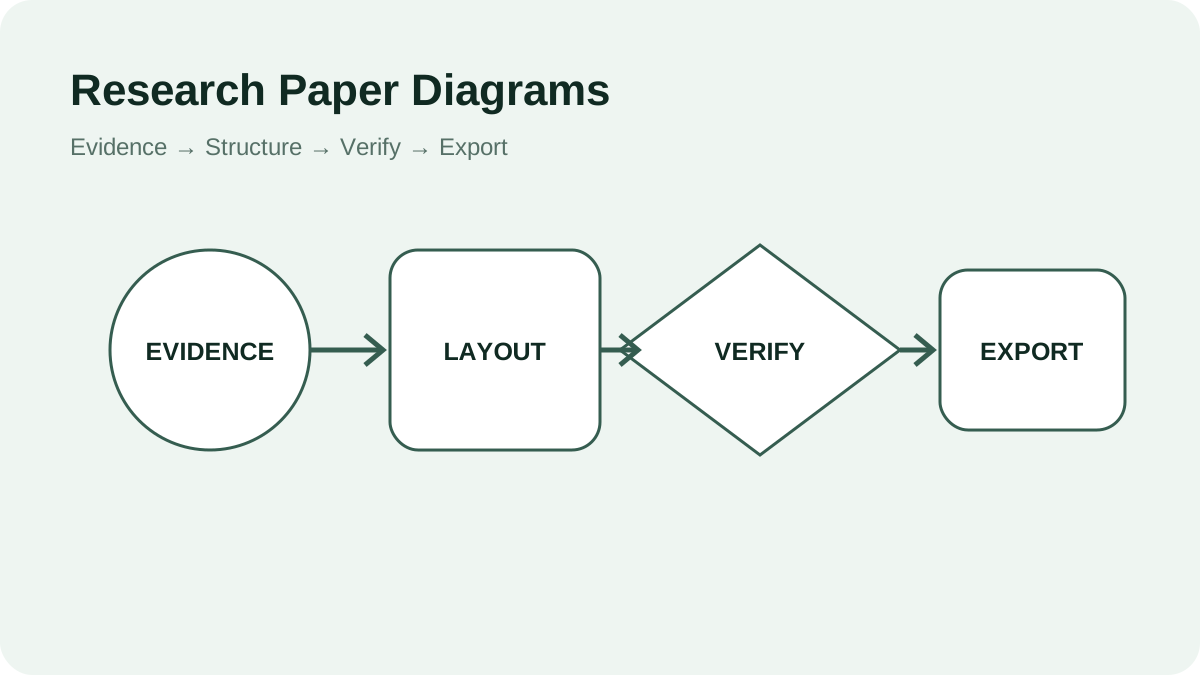
A strong scientific diagram is not just decorative. It compresses a research argument into a visual structure that readers can verify against the paper.
Start from the claim the diagram must support
Write one sentence describing what the reader should understand after viewing the figure. That sentence determines what belongs in the diagram and what should be removed.
Gather source-grounded inputs
Collect the measurements, accepted mechanisms, labels, units, and references that the visual will represent. Separate observed results from explanatory or hypothetical elements.
Choose the right diagram structure
Use a process diagram for ordered steps, a pathway for causal or biochemical relationships, a schematic for spatial structure, and a multi-panel figure when different evidence types need to be compared.
Build hierarchy before styling
Lay out major groups, arrows, labels, and panels first. Readers should understand the direction and grouping even before colors or decorative styling are added.
Verify scientific accuracy
Check labels, directionality, units, scale, sample names, and whether arrows imply a stronger causal relationship than the evidence supports. Ask a domain expert to review the final scientific meaning when possible.
Make the diagram accessible
Do not encode essential meaning using color alone. Use clear labels, adequate contrast, readable type sizes, and consistent shapes or line styles.
Prepare journal-ready export
Match the target journal's width and resolution requirements. Prefer vector output for diagrams and text-heavy figures, and confirm that raster components retain enough resolution at final print size.
Final pre-submission checklist
Compare the figure with the manuscript one last time. Titles, abbreviations, panel labels, statistical notation, terminology, and figure citations should all agree.